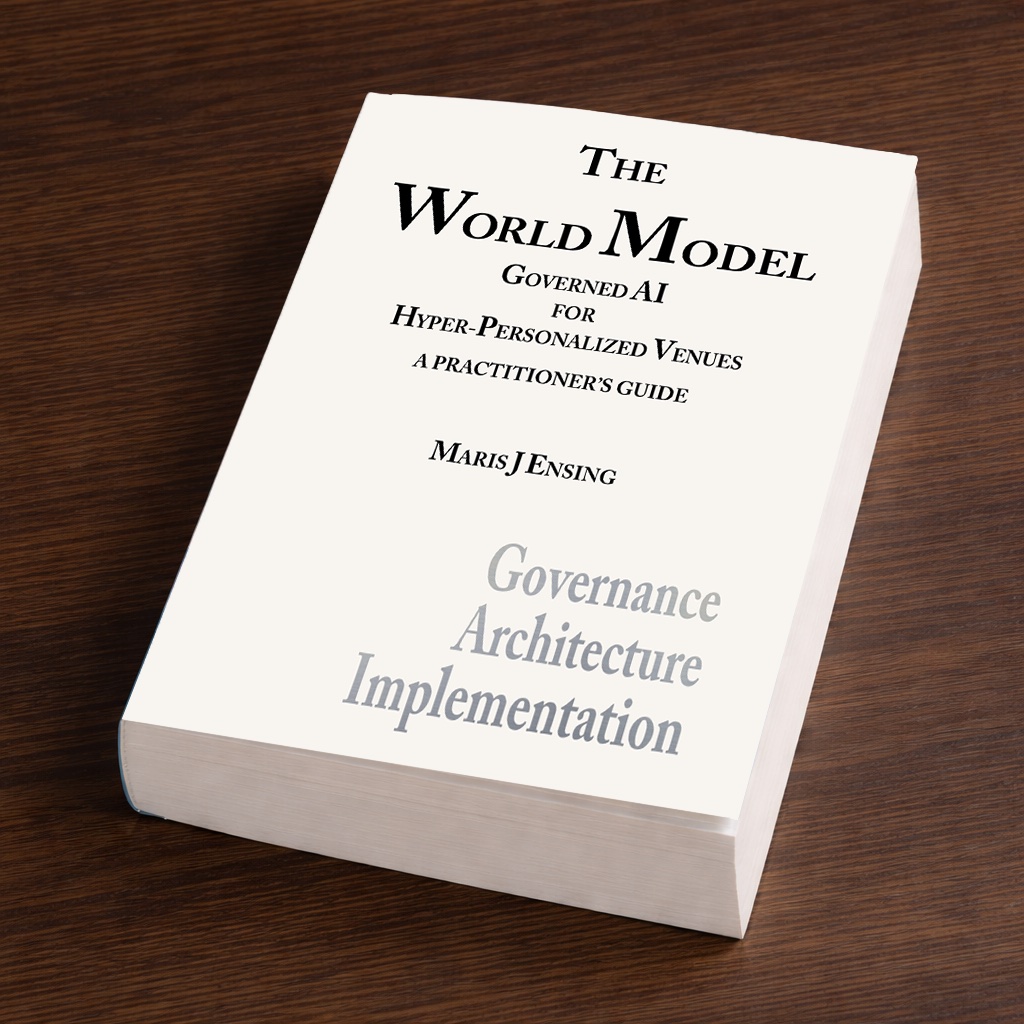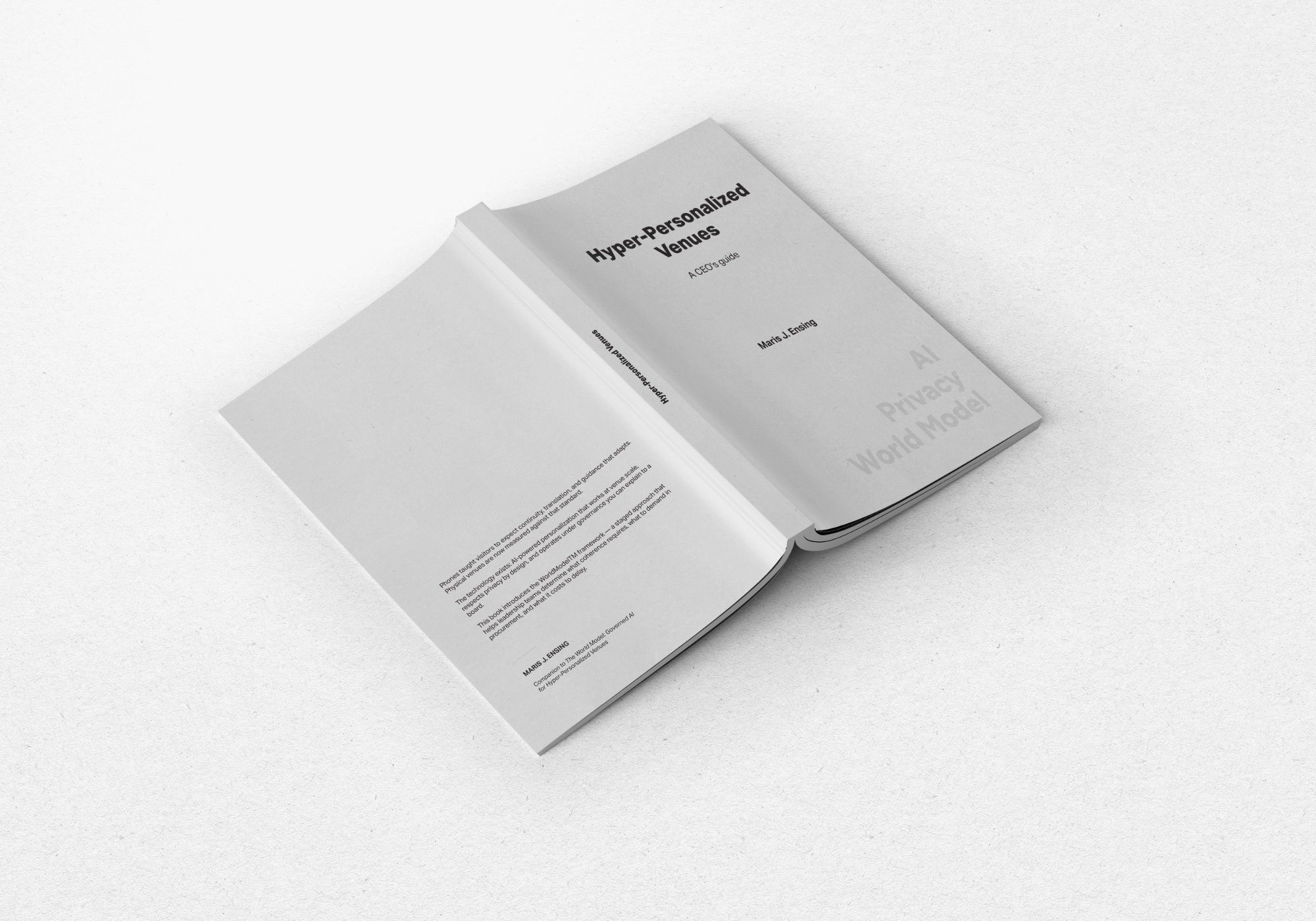
Two published works. Both #1 Amazon bestsellers. Used as reference by operators, consultants, procurement teams, and due diligence firms worldwide.
Modern is behavior, not hardware.
Phones trained people to expect continuity, instant translation, and guidance that adapts. Physical venues are now measured against that experience. Guests describe the gap as wasted time, repetition, and confusion — a day that feels harder than it should because the venue acts as if context must be rebuilt from scratch at every touchpoint.
The benchmark moved, and it is not moving back.
These two published frameworks define the architectural patterns for closing that gap — not by adding more screens, more apps, or more point solutions, but by building coherence into the operating architecture of the venue itself. Privacy-forward. Governed. Inclusive by design.
Small contradictions multiply into questions, questions become queues, queues become stress, and stress suppresses dwell, spend, learning, and return intent. These books show you how to build venues where the opposite happens.
Operators who move first define what the market expects. Operators who move later pay to meet that expectation after it becomes a baseline. Doing nothing is still a plan — a plan to pay the catch-up premium.
The most capable systems in the world will fail in public space if they are not trusted. Trust begins with privacy. These frameworks treat privacy as a design requirement, not a legal appendix. Anonymous by default. Opt-in only when it clearly benefits the visitor.
Hearing access, vision access, language dignity, sensory safety, acoustic comfort — not as afterthoughts, but as first-class acceptance criteria. Specified early, designed into the system, monitored in operation, preserved through upgrades.
Visitors remember how the day felt.
Written for CEOs, boards, owners, and senior designers. Intentionally non-technical. Helps leadership teams identify what has changed, understand what becomes possible, and demand the right outcomes in procurement and operations.
Introduces the Stage Ladder (0, 1, 2), the non-negotiables for privacy posture and governance, and the questions that force evidence — not claims — from vendors.
The complete practitioner's guide. Defines the architectural patterns, governance frameworks, consent models, recognition systems, and deployment strategies for governed hyper-personalization across 40+ vertical markets.
Built around a Book Covenant: positive, helpful, idea-forward, privacy-forward, inclusive by design. Includes model RFP specifications, evidence pack templates, commissioning checklists, and role-based reading paths for owners, designers, fabricators, and operators.
If you lead a venue, your most dangerous competitor is rarely the one with the newest building or the loudest marketing budget. It is the operator who makes the day feel easy.
Vendor-neutral by design. Both works present WorldModel™ as an open architectural framework — describing governance patterns, decision layers, and operational disciplines that any venue can adopt. Mad Systems has built the production-ready technology stack that implements every pattern described.